In luxury interiors, cohesion is not achieved through repetition, it is achieved through balance. The most refined spaces feel effortless because every material, tone, and texture works in quiet alignment. Nothing competes, nothing feels out of place, and the entire environment reads as a unified composition.
At the center of this composition is flooring. It is the only material that spans the entire space, connecting rooms, anchoring furnishings, and interacting continuously with light. For architects and interior designers, selecting the right flooring is not simply about choosing wood, it is about ensuring that every other material in the space has something to relate to.
This is where wide plank flooring plays a defining role. Its scale, natural variation, and visual clarity make it an ideal foundation for coordinating stone, metal, cabinetry, and other architectural elements. In high-end residences and luxury apartment flooring, it becomes the element that ties everything together.
Coordinating Wood with Stone, Metal, and Cabinetry
Luxury interiors rarely rely on a single material. Instead, they bring together multiple elements of natural stone, metal finishes, custom millwork, and textiles each with its own character.
The challenge is ensuring these materials feel connected rather than contrasted.
Interior designers often approach flooring as the base layer that informs all other selections. When specifying premium residential wood flooring, they consider:
- The undertones of stone surfaces (warm vs cool)
- The finish of metals (brushed, polished, aged)
- The color and grain of cabinetry
For example:
- Warm-toned wood floors pair naturally with brass, bronze, and warmer stones
- Cooler wood tones align better with steel, marble, and contemporary palettes
Luxury wide plank floors make these relationships more visible. Because of their larger surface area, they reveal more grain and tonal variation, allowing other materials to respond more naturally.
Warm vs Cool Palettes in Luxury Design
One of the most important decisions in interior design is the overall color direction of the space.
Warm Palettes
Warm interiors are characterized by:
- Natural wood tones
- Soft browns, beiges, and creams
- Metals like brass and bronze
These spaces feel inviting and grounded. They are often used in private residences and hospitality-inspired environments.
Cool Palettes
Cool interiors feature:
- Gray or neutral-toned woods
- Stone surfaces with cooler undertones
- Metals like chrome or stainless steel
These spaces tend to feel more contemporary and minimal.
When working with premium residential wood flooring, establishing this palette early ensures consistency across all materials.
In recent luxury projects, designers are increasingly leaning toward warmer tones, as they offer greater flexibility and age more gracefully over time.
Texture Pairing Strategies
Texture plays a subtle but powerful role in how materials interact.
In a well-balanced space, textures complement rather than compete.
Interior designers often pair:
- Smooth cabinetry with lightly textured wood floors
- Honed stone with matte wood finishes
- Soft textiles with natural wood grain
For wide plank flooring, texture selection is particularly important because of the scale of each board.
Subtle textures such as wire-brushed or lightly hand-worked surfaces help:
- Reduce glare in large spaces
- Enhance natural grain
- Add depth without visual noise
In luxury wide plank floors, texture should support the overall design language, not dominate it.
Avoiding Material Conflicts
One of the most common challenges in luxury interiors is material conflict when elements feel disconnected or overly contrasted.
This often happens when:
- Too many tones are introduced without a clear palette
- Materials compete for attention
- Flooring does not align with surrounding finishes
To avoid this, designers focus on restraint.
When specifying premium residential wood flooring, they often:
- Limit the number of dominant tones
- Choose finishes that complement rather than contrast
- Ensure transitions between materials are seamless
This approach creates a sense of calm and cohesion, allowing each material to contribute without overwhelming the space.
Using Wide Plank Flooring to Unify Spaces
In open-plan layouts and large residences, flooring must connect multiple zones without interruption.
Wide plank flooring is particularly effective in achieving this because it:
- Reduces visual breaks between spaces
- Creates long, continuous lines
- Supports a consistent material language
In large homes, this allows living, dining, and kitchen areas to feel connected. In apartments, it enhances the perception of space, an important factor in luxury apartment flooring.
By using luxury wide plank floors consistently throughout a project, designers create a foundation that allows other materials to vary while still maintaining overall cohesion.
Applications in Luxury Apartment Flooring
In multi-unit developments, material coordination becomes even more critical.
For luxury apartment flooring, consistency must be balanced with individuality. Each unit should feel part of a larger design vision while still offering a unique experience.
Wide plank wood flooring supports this by:
- Providing a consistent base across all units
- Allowing natural variation in grain and tone
- Enhancing perceived space in open-plan layouts
Developers and designers often use flooring as the anchor, then layer variations in finishes and furnishings to create distinction.
Collaborating with Interior Designers and Architects
Creating cohesive interiors is rarely the result of a single decision. It is the outcome of collaboration between architects, interior designers, and material specialists.
Designers often work closely with flooring experts to:
- Refine color and finish selections
- Align flooring with architectural details
- Ensure compatibility with other materials
This collaborative approach ensures that premium residential wood flooring integrates seamlessly into the overall design rather than being treated as a separate element.
Conclusion: Cohesion as the Foundation of Luxury Design
Luxury interiors are defined not by individual elements, but by how those elements come together.
Flooring plays a central role in this process. By selecting wide plank flooring and aligning it with surrounding materials, architects and designers create spaces that feel intentional, balanced, and enduring.
Whether in private residences or luxury apartment flooring, cohesive material design ensures that every surface contributes to the overall experience.
For projects that demand both refinement and performance, luxury wide plank floors provide a quiet foundation, connecting every detail into a unified whole.
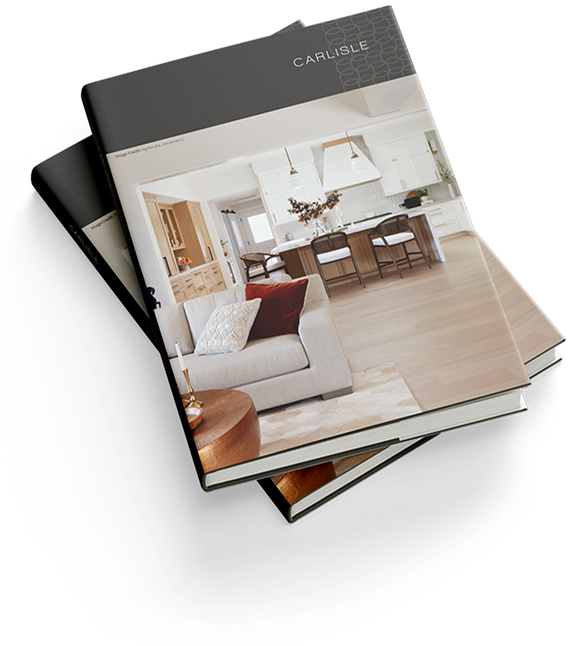
The Carlisle Residential Lookbook is filled with real projects, design inspiration, and ideas to guide your flooring journey. Download today and take the first step toward your own masterpiece.
By subscribing you agree to receive emails and marketing materials from Carlisle.