Hickory: A Closer Look with Chris Sy, President Carlisle Wide Plank Floors
Some homeowners want a floor with more interest than white oak or red oak, without the country feel that heavy knots and texture can bring. Hickory sits in that space. Known for its color variation, it is the hardest domestic hardwood Carlisle uses for flooring, and it takes stain in ways that can read rustic, refined, or somewhere in between.
In this episode of the Carlisle Species Series, President Chris Sy walks through what designers, builders, and homeowners should know about hickory, from hardness to heartwood.
What Chris covers in this video
- Where Carlisle’s hickory comes from, and why only two species
- Heartwood, sapwood, and hickory’s signature color variation
- How hickory performs underfoot
- How dark, medium, whitewash, and clear finishes change the look
- Why character reads differently in hickory than in white oak
Where Carlisle’s hickory comes from
Carlisle sources its hickory from western Pennsylvania, down into West Virginia, and up into western New York. About 12 species of hickory grow in the United States. Carlisle works with two: bitternut and shagbark.
Chris explains the choice: These two tend to show the richest heartwood color, and they grow the largest, which allows for wider boards. The widest board in a Carlisle hickory floor is typically about 10 inches.
Heartwood, sapwood, and color variation
Color variation is what hickory is known for. Along the edges of a board, the sapwood ranges from a very light white to a creamy beige. Toward the center, the heartwood trends toward a beige-brown, sometimes deeper and sometimes lighter from board to board.
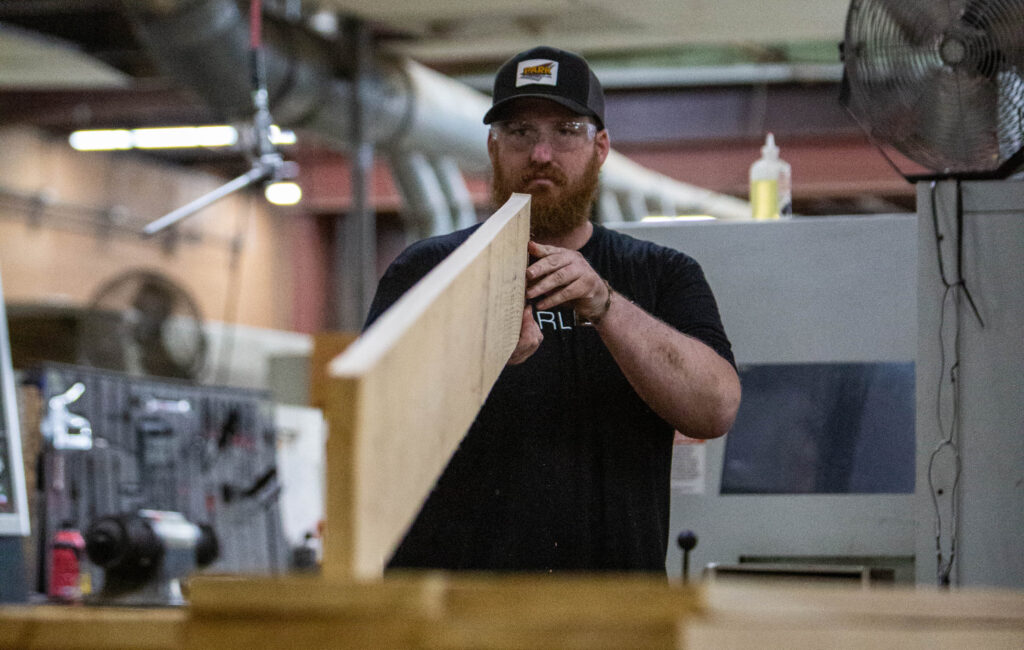
At Carlisle, floors are crafted one board at a time, so the craftsmen choose the face that will make the best floorboard. With hickory, that usually means the face with more heartwood. Choose the other face, and the same board becomes a light, sap-heavy plank.
That choice shapes the whole floor. Chris notes that the attention to heartwood keeps board-to-board variation more balanced than in commodity manufactured hickory floors. The variation is still there, but it reads as a palette of shifting tones rather than a sharp, radical contrast.
How hickory performs
Hickory is the hardest domestic hardwood Carlisle uses for flooring: harder than white oak and harder than maple. For kitchens, active family homes, and high-traffic rooms, that hardness makes it well suited to day-to-day wear.
How stain changes hickory
Finish is where hickory becomes one of the more versatile species in the Carlisle collection.
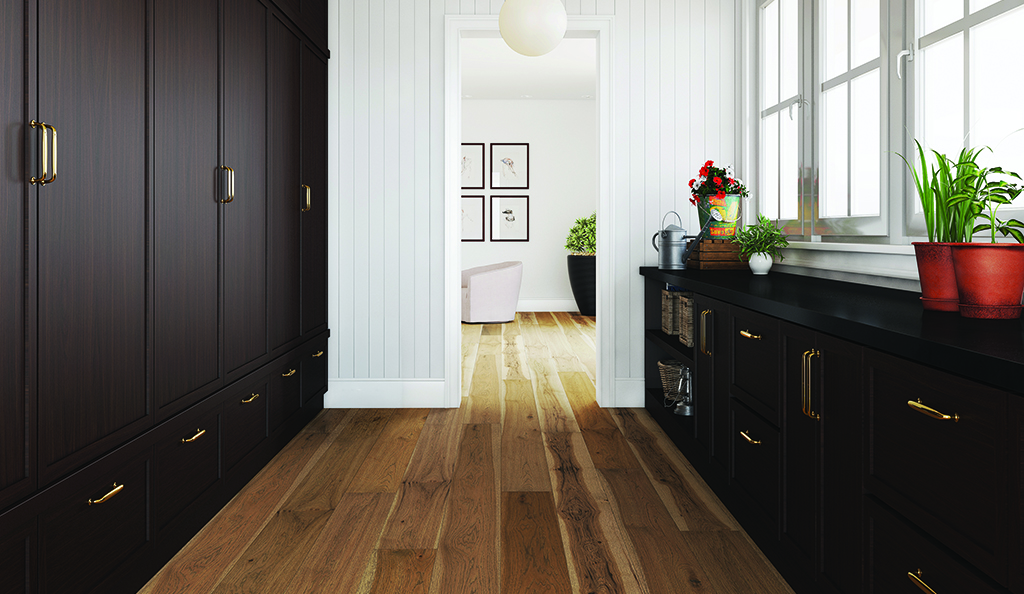
- Dark stains. The sapwood is still there along the edge of the board, but a deep stain evens it out so much that the floor could be mistaken for oak.
- Medium brown stains. These soften the variation, trading the sharp white-to-brown contrast for a range of brown tones.
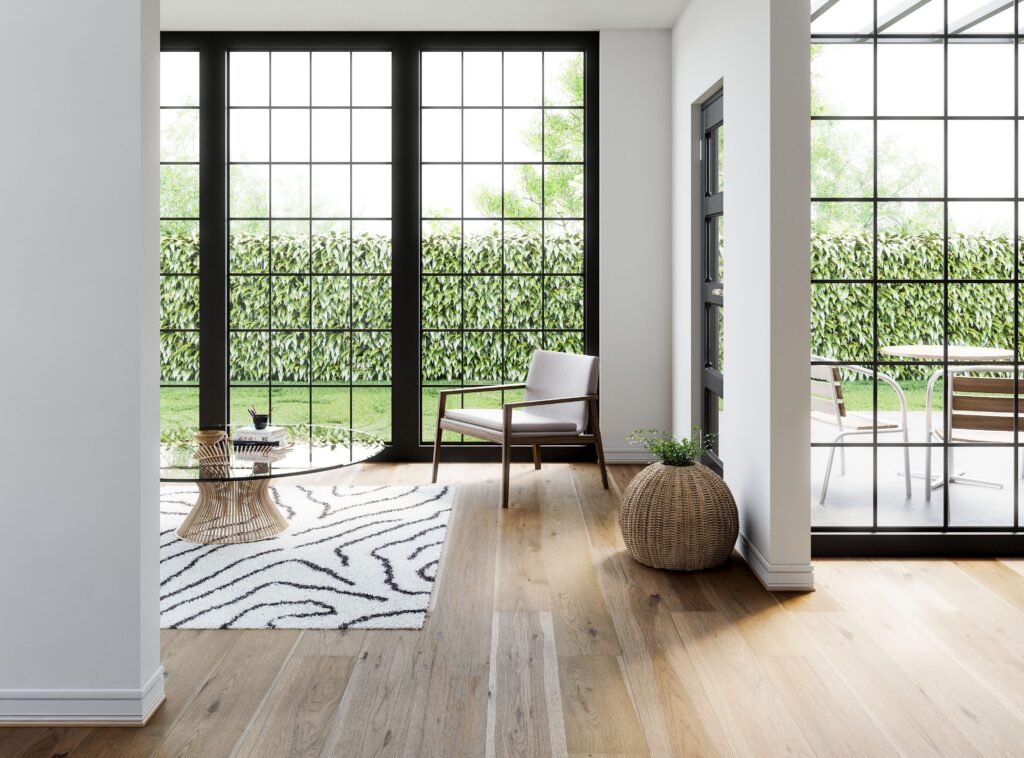
- Whitewash. This tones down the heartwood and brightens the sapwood for a lighter, softer look.
- Clear, natural finish. Character becomes more visible. In white oak, knots are usually close in color to the surrounding wood. In hickory, knots and character marks are often dark, close to black, against the lighter wood behind them. That contrast gives a naturally finished hickory floor a more rustic feel.
For a client who wants hickory’s natural movement with a more contemporary look, a stain is the most direct way to get there.
Is hickory right for your project?
For designers: a species with built-in color movement that can be tuned with stain, from an even, warm brown to a light whitewash. A strong option for clients who are ready to move past white oak.
For builders: the hardest domestic species in the Carlisle line, with boards typically up to about 10 inches wide, suited to homes that see real daily use.
For homeowners: a hard-wearing floor with natural variation. Choose a clear finish if you love rustic character, or a stain if you want something calmer and more contemporary.
Carlisle’s Species page shows you all the flooring species and details. Visit page
Carlisle’s approach to sourcing
Carlisle sources mature, responsibly harvested hardwood from domestic, slow-growth regions, working with independent sawyers and landowners. There is no clear-cutting. Carlisle’s prefinished floors have no measurable VOCs, no added urea formaldehyde and every floor is crafted in the U.S.
Learn more about Carlisle’s sustainability practices. Visit page
Explore hickory
See hickory in person at a Carlisle showroom, or request samples to compare stains in your own light. Learn more about White Oak and Ash in the Carlisle Species Series.
Video transcript
There are people who want a little bit of character in the floor. They want to know that the floor is very natural, but maybe the presence of knots or texture or something like that is just too country for them. Maybe they want something a little bit more contemporary. And I think hickory really provides that to somebody who wants a little bit of character or a little bit more interest in the floor by taking it and staining it, like these subtle shifts of color from this edge into the middle and then on to the next board, really create an interesting palette that plays a little bit more into the hands of somebody who’s tired of white oak, or tired of red oak, or wants something hard, but something with a little bit more interest to it.
And obviously, what it is most known for is the color variation that you see here. So you’re going to get some of these lighter toned sapwood colors on the edge of the board that vary from this very light white color to a little bit more creamy or beige. And then the heart color tends to be more of a beige brown tone. You can see some of the darker spectrum here in this board, but it can go a little bit lighter as you see down in this board.
At Carlisle, because we’re making individual floors and we’re crafting boards one at a time, we’re picking the face that is going to make the prettiest floorboard. And in this case, obviously we’re picking the face that has more heartwood. If we had picked the other face, they would get a very light colored, heavy sap board. That individual crafting makes a big difference in a floor like hickory, where you can pick the higher heart content board.
All of our hickory comes from western Pennsylvania down into West Virginia a little bit, and up into Western New York. It’s all bitternut or shagbark Hickory. There’s actually about 12 different species of hickory in the United States. We focus on these two because they tend to present the richest heartwood color. They tend to get the biggest, so we get greater dimension out of them. The widest board we typically get in a hickory floor is about ten inches wide.
Hickory, as far as how it performs, it is the hardest domestic hardwood that we use for flooring. So it’s going to be harder than white oak, harder than maple, so there’s no issues with it denting or dinging. It’s certainly going to hold up to day to day wear.
One of the things that you’ll notice about our hickory floors that are a lot different from other hickory floors is really that consistency in the heartwood, and it makes a big difference in how the floor appears. Because even though there is color variation from board to board, it still isn’t as radical as a more commodity manufactured floor or a floor that is not paying attention to the overall heartwood.
This is a hickory floor, it’s hard to see, but it does have sap running down this edge of it, but because the board is stained very dark, it could be an oak floor.
As you go down into kind of your medium tones, you can see that the medium tone brown stains are really going to even that color variation out a little bit, so you don’t have the sharp contrast of white to brown. You get all these brown tones.
This is our whitewash that tends to tone down this heartwood a little bit, and also tends to whiten up the sapwood a little bit. So this is a pretty look for hickory as well.
I think one of the things about hickory when it’s naturally finished, if you put a clear on it, that jumps out is the character is more obvious. In a floor like white oak, the character, the knots, are really the same color or very similar color to the wood around it. Whereas in a hickory, you can see that the character is often dark black in sharp contrast to the lighter colors behind it. So if you aren’t staining the wood a darker color, I think the character in a hickory floor appears a little bit more rustic just because of that contrast to the wood behind it. Featured image: