Designing large luxury spaces presents a unique challenge and one that goes beyond aesthetics. In expansive residences, penthouses, and high-end apartments, scale must be managed with precision. Without careful material selection, even the most impressive spaces can feel fragmented, disconnected, or visually overwhelming.
Flooring plays a central role in solving this challenge. It is the one element that spans the entire space, connecting rooms, guiding movement, and shaping how architecture is experienced. For architects and designers working on large-scale interiors, the right flooring strategy is not decorative; it is foundational.
This is where wide plank flooring becomes essential. When properly specified, it creates continuity, enhances proportion, and allows large spaces to feel intentional rather than oversized. In modern luxury design, luxury wide plank floors are not simply preferred they are expected.
The Challenge of Large Open-Plan Layouts
Open-plan living has become a defining characteristic of luxury residential design. Expansive living areas, integrated kitchens, and seamless transitions between indoor zones demand a cohesive material strategy.
However, scale introduces complexity.
In large spaces:
- Visual breaks become more noticeable
- Repetition can feel overwhelming
- Materials can either unify or divide the space
Without the right flooring, open-plan layouts can quickly feel disjointed. Multiple transitions, excessive seams, or inconsistent finishes disrupt the space’s natural flow.
For architects and developers, the goal is clear: create a sense of continuity that supports both movement and design clarity.
Why Wide Plank Flooring Enhances Spatial Flow
Among all flooring options, wide plank flooring is uniquely suited to large environments.
Wider boards reduce the number of seams across the floor, allowing the surface to read as a continuous plane rather than a series of individual elements. This uninterrupted flow is critical in expansive interiors, where the eye naturally travels across long distances.
In practical terms, luxury wide plank floors:
- Create longer, cleaner sightlines
- Reduce visual clutter
- Strengthen architectural continuity
- Enhance the perception of space
For large residences and penthouses, this effect brings balance. Instead of competing with the scale of the architecture, the flooring supports it.
Plank Width and Room Proportions
Proportion is one of the most important and often overlooked considerations in flooring design.
In smaller rooms, narrow planks may feel appropriate. But in large spaces, they can create excessive repetition, making the floor feel busy and out of scale.
Wider planks, typically 7 inches and above, align more naturally with the proportions of luxury interiors. In grand living areas, long corridors, and open-plan layouts, they create a visual rhythm that feels measured rather than repetitive.
For premium residential wood flooring, this alignment between plank width and room size ensures that the floor enhances the architecture instead of diminishing it.
Architects often evaluate plank width in relation to:
- Ceiling height
- Room length and width
- Window scale and light exposure
When these elements are in balance, the result is a space that feels cohesive and intentional.
Color and Texture in Large Spaces
In expansive interiors, color and texture decisions carry more weight. What works in a smaller room can feel dramatically different when applied across a large surface area.
Color Considerations
In large luxury spaces, color should support continuity. Overly contrasting tones or high-variation patterns can create visual fragmentation, breaking up the flow of the space.
Neutral and warm tones are often preferred because they:
- Reflect light evenly
- Maintain consistency across large areas
- Complement a wide range of materials
For premium residential wood flooring, carefully selected tones ensure the floor integrates seamlessly with walls, cabinetry, and architectural finishes.
Texture Considerations
Texture becomes more noticeable as surface area increases. Subtle textures such as wire-brushed or lightly hand-worked finishes help soften the floor without overwhelming it.
In luxury wide plank floors, texture should:
- Enhance natural grain
- Reduce glare in large, well-lit spaces
- Support long-term wear and usability
The goal is to create depth without distraction.
Avoiding Visual Fragmentation
One of the biggest risks in large interiors is fragmentation, which is the feeling that a space is divided rather than unified.
This often happens when:
- Multiple flooring types are used unnecessarily
- Plank widths are too narrow for the scale
- Transitions interrupt the visual flow
Wide plank flooring addresses this by simplifying the visual field. Fewer seams and consistent material application allow the floor to connect different zones naturally.
In open-plan homes and apartments, this continuity:
- Strengthens the relationship between spaces
- Makes transitions feel seamless
- Reinforces architectural intent
For developers, reducing fragmentation also improves how spaces are perceived during walkthroughs and showings.
Applications in Estates and Luxury Apartment Flooring
The advantages of wide plank flooring become even more apparent when applied across different types of large-scale projects.
Luxury Estates
In large private residences, flooring must support expansive layouts without overwhelming them. Luxury wide plank floors provide the scale needed to match grand architecture while maintaining warmth and livability.
They are particularly effective in:
- Great rooms with high ceilings
- Long hallways and gallery spaces
- Open kitchen and living areas
Luxury Apartment Flooring
In multi-unit developments, consistency is key but so is differentiation.
For luxury apartment flooring, wide planks offer:
- A premium baseline across all units
- Visual continuity in open-plan layouts
- A design feature that enhances perceived value
Even in smaller apartments within large developments, wide planks help maximize the sense of space, an important factor in buyer and tenant perception.
Designing for Long-Term Relevance
Large luxury spaces are long-term investments. Flooring must remain relevant not just at the time of installation, but years into the future.
Wide plank floors, with their emphasis on proportion and material authenticity, age more gracefully than trend-driven alternatives. Their simplicity allows them to adapt as interiors evolve, supporting new furnishings, finishes, and layouts over time.
For architects and developers, this longevity reduces the risk of design becoming dated, an important consideration in high-value properties.
Conclusion: Designing with Scale in Mind
Large luxury spaces require more than beautiful materials; they require thoughtful coordination of proportion, flow, and detail.
Wide plank flooring plays a central role in achieving this balance. By reducing seams, aligning with architectural scale, and supporting visual continuity, it transforms expansive interiors into cohesive, livable environments.
For projects that demand both design clarity and long-term performance, luxury wide plank floors offer a solution that is as practical as it is refined. Whether in private estates or luxury apartment flooring, the right flooring strategy ensures that scale becomes an asset, not a challenge.
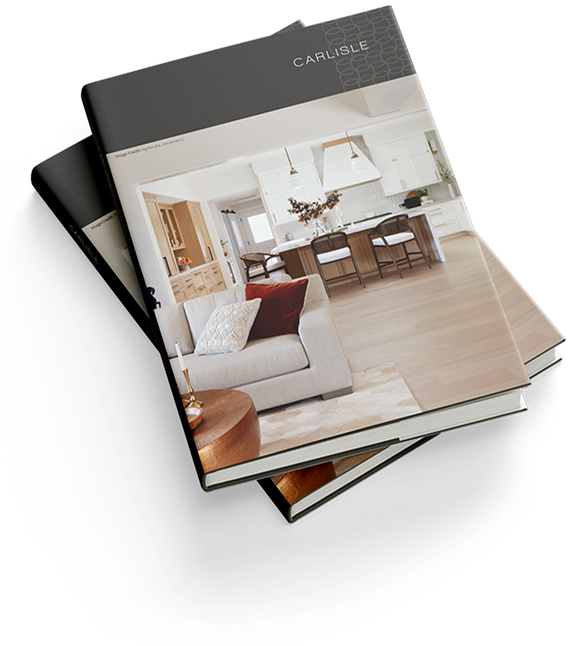
The Carlisle Residential Lookbook is filled with real projects, design inspiration, and ideas to guide your flooring journey. Download today and take the first step toward your own masterpiece.
By subscribing you agree to receive emails and marketing materials from Carlisle.