Ash: A Closer Look with Chris Sy, President of Carlisle Wide Plank Floors
Ash holds a special position in American woodcraft. It shaped baseball bats and boat frames, wove into Native American baskets, and powered early American industry. Yet as a flooring choice, it remains a quiet discovery, valued by those who find it.
In our continued series on wood species, Carlisle President Chris Sy walks through what makes ash distinctive: its growth, character, grain behavior, grading approach, and why it finishes with such range.
What Chris Covers in This Video
Chris explains the growth habits that define ash wood. Unlike oaks, which branch lower to the ground, ash trees race upward to reach the forest canopy, creating tall timber with few lower branches. This growth pattern produces wood with minimal knots and a distinctive three-dimensional grain character, twisting and turning as the tree chased sunlight through the canopy openings.
He also addresses ash’s heart and sapwood variation. Unlike hickory, ash boards are not graded or selected to maintain a minimum heartwood percentage. You can encounter ash with predominantly heartwood, predominantly sapwood or sporadic sapwood streaks that vary along a single board. This natural variation is part of the material story, preserved rather than engineered away.
Chris clarifies why Carlisle offers only Heirloom grade ash. The growth pattern that creates beautiful, clear timber also prevents the formation of sound knots needed for Signature or Original grades. Heirloom ash is refined and minimal in character; variation comes primarily from tone and grain, not knots.
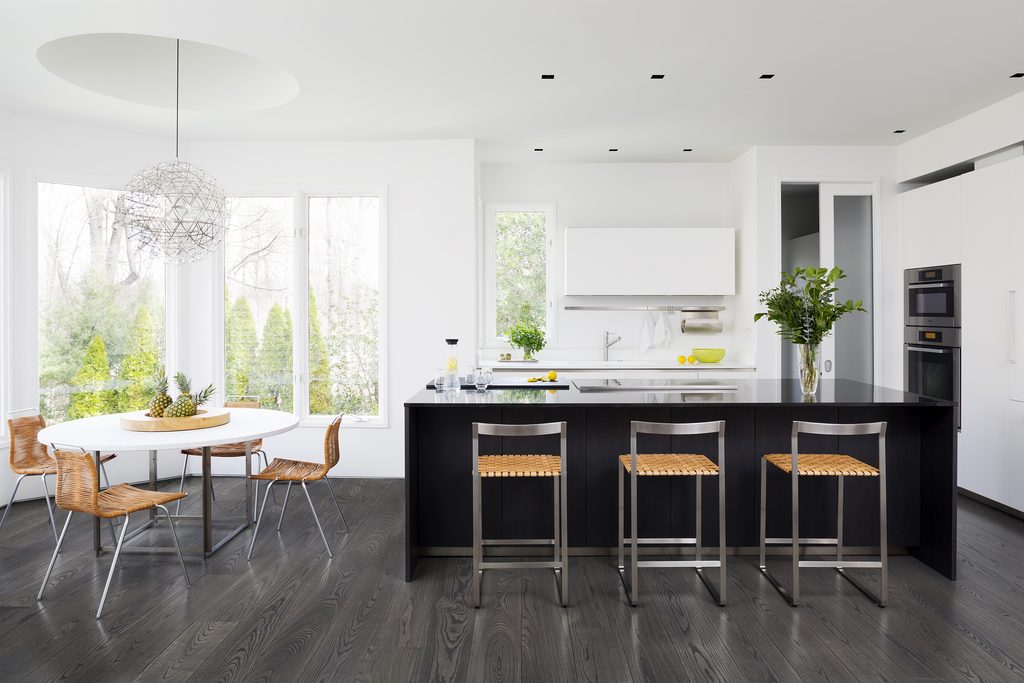
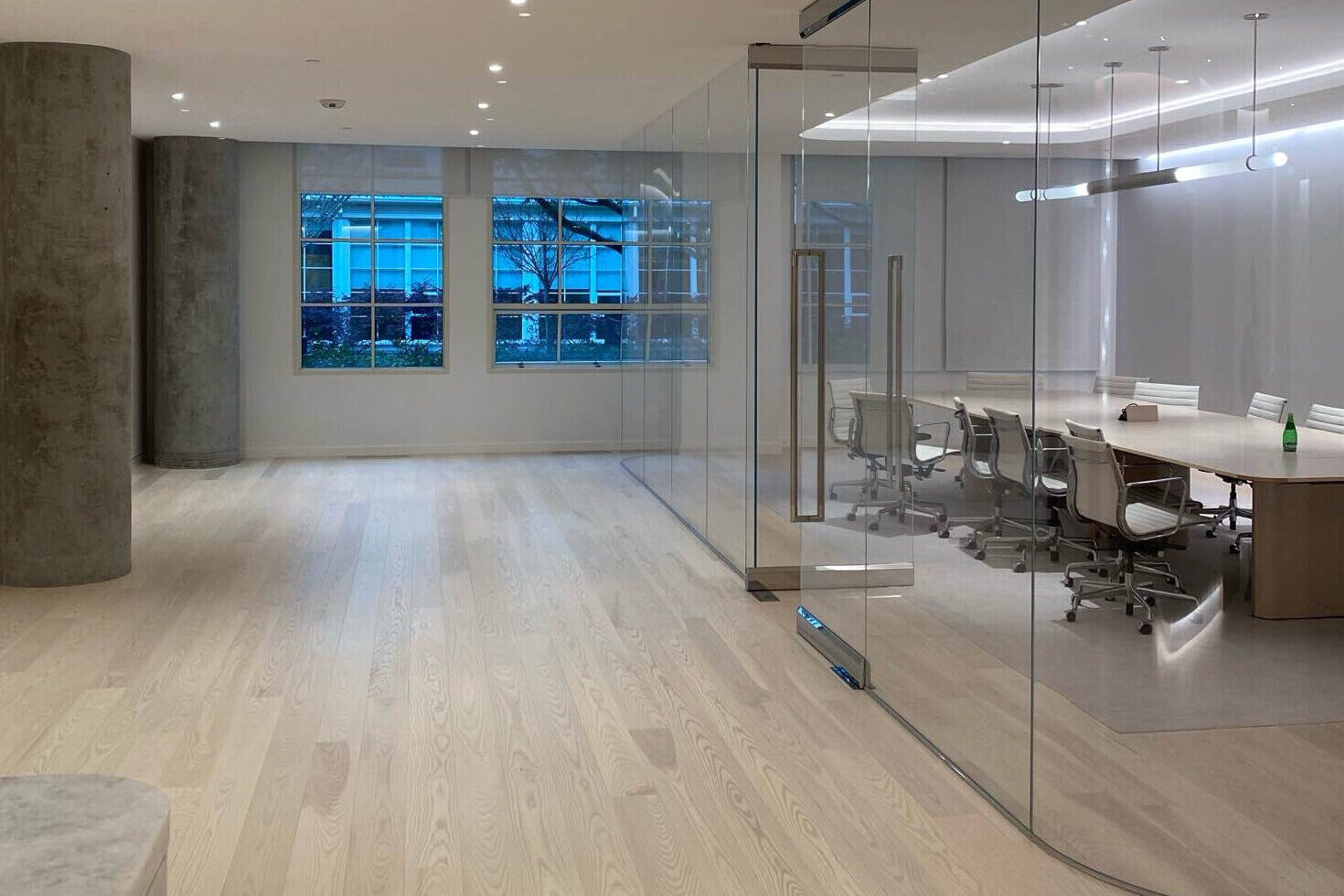
He also covers finish options. Ash’s open grain structure accepts stain like other open-grain woods, but the grain character reads distinctly different. When finished clear or light, the ash’s grain swirl and movement feel more dramatic than the straighter grain of white oak. When stained dark, that same twisting grain becomes subtler, and ash can read remarkably like white oak, distinguished primarily by longer planks where the grain movement becomes visible.
Ash in America
Ash has deep roots in American making. Its bending strength and flexibility, without brittleness, made it the wood of choice for baseball bats. Native Americans valued ash for its workability, stripping and weaving it into baskets for centuries. Ash’s combination of hardness and elasticity suited it to handles, oars, and structural work where other woods would snap.
The wood hardness places it in the ballpark of red oak, making it durable underfoot. Its grain character, however, sets it apart. The three-dimensional movement that emerges from how the tree grew gives ash a visual personality distinctly its own, more active than many straight-grain hardwoods, yet refined enough to anchor contemporary spaces.
Carlisle’s Approach to Ash
Carlisle sources ash wood from domestic forests and mills in New Hampshire. Every board is made in the United States, from start to finish. Carlisle’s engineered ash floors exceed CARB2 requirements for formaldehyde emissions and contain no added urea formaldehyde. They’re built on a marine-grade Baltic Birch core with a 4mm solid hardwood wear layer, refinishable up to three times.
Ash’s growth character means Carlisle makes only Heirloom grade. This grade is clean and refined, with occasional mineral streaking and touches of sapwood that add natural variation. The material’s own story, how it grew, where it darkened or lightened—remains visible and intentional. It’s not a limitation; it’s fidelity to what the wood is.
Comparing Ash with Other Species
Two species most often considered alongside ash are white oak and hickory.
White Oak offers a neutral undertone and predictable grain structure. Its tight grain absorbs stain evenly, making it the go-to choice when design direction is still open. Ash reads differently. While both are clean when selected for Heirloom grade, the ash grain has movement and complexity that oak simply doesn’t carry. Ash’s three-dimensional grain character, the twisting, turning effect from how the tree grew becomes visible especially in longer planks and lighter finishes. When both are stained dark, they can appear similar, but ash’s sophistication lies in its grain texture rather than its neutral backdrop quality.
Hickory brings drama. It’s celebrated for bold heart and sapwood contrast, sound knots, and visual grain variation that celebrates the wood’s natural character. Hickory is a statement. Ash is a whisper. Both are hard and durable, but hickory’s grading strategy amplifies contrast and character. Ash’s grading strategy minimizes it. If a client wants their floor to command attention, hickory delivers. If they want durability paired with understated elegance, ash (or white oak) is the choice.
Both species are available in the same Curated colors. Please work with your design consultant on length and width variety.
Why Ash Remains Underused
Ash finishes exceptionally well. It takes stain in nearly any direction and the grain structure absorbs pigment in ways that create depth and character. Yet ash has become less common in the marketplace. Fewer mills offer it; fewer designers and builders specify it; fewer homeowners encounter it as an option.
When people discover ash, they often love it. But that discovery has to happen first. Carlisle offers it for those who want something quieter than hickory’s drama, more textured than white oak’s neutrality—a wood that moves and evolves with light and space.
Learn more about all hardwood floor species
Subscribe to our newsletter for featured projects and events where you can find Carlisle
Download our new residential lookbook
Download our new commercial lookbook
Contact us today for a sample box
Video Transcript
Today we’re here to talk about ash.
Ash has a great history. It is used for baseball bats, predominantly. And one reason for that is that it actually has a great bending strength and flexibility to it, without being brittle or snapping the way harder or more dense woods might.
Native Americans actually stripped pieces of ash to weave their baskets with. So it’s been used, widely used, for a variety of purposes throughout history.
One of the things that makes woods like ash, birch, brown maple a little bit different than hickory—they’re all known for having heart sap contrast—but unlike hickory, ash, we do not grade it or saw it to have some minimum percentage of heartwood. So you can get boards that may be more predominantly sap, or you can get boards that are more predominantly heart. And then you can have boards where the sapwood really comes in at very sporadic points and then disappears at the other end of the board. And then this is a great example of how much the heart content can vary in an ash board.
Another defining characteristic of ash is that when you see the ash tree in the forest, you rarely see branches very close to the ground. The tree grows very fast straight up to try to get to the canopy of the forest and get its branches out into the sunlight, and it really does not have very many, if any, branches close to the ground. It’s a very spindly looking tree in the forest, and what that means is that we don’t have the character at the larger portion of the timber to be able to create a grade any other than heirloom.
So the heirloom grade you see here really doesn’t have a lot of character other than the variation. You really aren’t going to get knots. And we can’t make a signature grade because most of the branches are very high up where the timber is a lot smaller.
You can think about the ash tree the way you might think about a house plant that you set on a table near your window and some of those house plants, that just kind of run for the light very, very quickly, and they grow kind of stringy because they’re chasing the sunshine. That’s essentially what an ash tree does, and it twists and turns as it goes up, trying to chase the openings in the forest for where that sunlight is.
So a thing that differentiates it from the oaks is really this: it’s more of a three-dimensional kind of twisting, turning grain. And you can get some really kind of different angles of the grain working across the board, and can see here it’s more of a three-dimensional effect. So although it’s an open grain wood, like white oak or red oak or hickory, it tends to look different, and the grain seems to me a little bit more radical than the more straight grain woods, like a red or white oak.
So when you’re looking at options for finishing ash, we have laid out a couple of different colors here. Obviously, we have a clear coat here that’s not really going to change the color of the original timber. Here we have just an amber satin. So you’re getting a little bit more of that gold and the oil look into the floor, and then here we have some other colors here.
That show you like oak, you’re going to get some of this more sharp contrast in the open grain versus the closed grain as far as how it’s going to take the pigment. This darker color here is obviously the open grain, where it’s absorbing more of the pigment and creating that darker color.
When you see a really straight grain piece like this, it’s very hard to tell ash from white oak. A color like this is going to cover up the sap heart contrast and it looks very similar to white oak. I would say the only way you can tell the difference is when you see the longer boards and you can see in the ash a little bit more of that radical grain swirl and twist and turn due to the way the tree grew.
It is, compared to oak, it’s extremely hard. It’s in the ballpark of a red oak as far as hardness goes. I would say it’s one of those floors that when people discover it, I think they really like it, but it’s never been a super popular floor for us. It does finish really, really well.
I think some of the challenges on the supply side right now, you’re seeing fewer and fewer people offer ash floor, so probably the consumer isn’t seeing them as frequently as they might have.