In luxury construction, performance is as important as design. While materials are often selected for their visual impact, their ability to perform under real-world conditions ultimately determines long-term success. This is particularly true for wood flooring, where environmental factors such as moisture, temperature, and climate play a defining role.
For architects and developers working on high-end residences and large-scale luxury residential development projects, understanding how wood behaves in different environments is essential. Flooring must be specified not only for how it looks at installation, but for how it performs years later.
When it comes to premium residential wood flooring, environmental awareness is not optional; it is fundamental to achieving lasting quality.
Understanding the Environmental Impact on Wood Flooring
Wood is a natural material that responds continuously to its surroundings. Changes in humidity and temperature cause it to expand and contract, affecting both its appearance and structural stability.
In controlled environments, these movements are minimal. However, in real-world conditions, particularly in large homes and multi-unit developments, variations are inevitable. Architects must account for:
- Seasonal humidity changes
- Indoor climate control systems
- Differences between ground-level and upper-level conditions
- Variations across units in large developments
For premium residential wood flooring, these factors influence not only product selection but also installation methods and long-term performance expectations.
Humidity, Coastal Climates, and High-Rise Conditions
Different environments present different challenges.
Coastal and High-Humidity Regions
In coastal areas or regions with naturally high humidity, wood flooring is exposed to consistent moisture levels. Without proper specification, this can lead to:
- Expansion of planks
- Cupping or warping
- Long-term instability
In these environments, flooring must be selected with stability as a primary consideration.
High-Rise and Urban Developments
In vertical construction, environmental conditions can vary significantly from one unit to another. Upper floors may experience different temperature and humidity levels compared to lower levels.
For luxury apartment flooring, this variability creates a need for materials that perform consistently across all units, regardless of location within the building.
Seasonal Climate Variations
In many parts of the United States, seasonal shifts between dry winters and humid summers create continuous movement in wood flooring.
Proper specification ensures that flooring accommodates these changes without compromising performance or appearance.
Why Engineered Structure Is Often Preferred
In environments where stability is critical, engineered wood flooring has become the preferred solution.
Unlike solid wood, which is milled from a single piece, engineered planks are constructed with a hardwood surface layer bonded to a multi-layered core. This structure reduces the impact of environmental changes.
For luxury residential development projects, an engineered structure offers:
- Greater dimensional stability
- Reduced expansion and contraction
- Improved performance in varying climates
- Compatibility with modern building systems
Working with an experienced engineered hardwood manufacturer ensures that engineered flooring is designed to meet the specific demands of luxury projects.
Radiant Heat Considerations in Luxury Projects
Radiant heating systems are increasingly common in high-end residential and multi-unit developments. While they enhance comfort, they introduce additional complexity for wood flooring.
Heat fluctuations can accelerate moisture loss in wood, increasing the risk of movement or surface changes.
Engineered wood flooring is typically better suited for radiant heat applications because:
- Its layered structure distributes stress more evenly
- It maintains greater stability under temperature variation
- It reduces the likelihood of gaps or warping
For luxury apartment flooring, where radiant heat may be used across multiple units, proper flooring specification is essential to ensure consistent performance.
Planning for Long-Term Performance
Luxury flooring is judged over decades, not months. This makes long-term planning a critical part of the specification process.
Architects and developers must consider:
- How the flooring will respond to daily use
- How finishes will age under natural light
- How environmental conditions will evolve over time
For premium residential wood flooring, this means selecting materials that are not only visually aligned with the project, but also capable of maintaining their integrity under real-world conditions.
Proper planning also reduces:
- Maintenance requirements
- Post-installation issues
- Long-term costs associated with repairs or replacement
Consistency Across Units in Large Developments
In multi-unit projects, consistency is essential. Flooring must perform uniformly across all residences, regardless of variations in exposure or usage.
For luxury residential development projects, this requires:
- Standardized specifications across units
- Materials that tolerate environmental variation
- Reliable performance in different conditions
Engineered flooring supports this consistency, making it a preferred choice for developers managing large-scale installations.
Choosing the Right Engineered Hardwood Manufacturer
Not all engineered flooring is created equal. The quality of construction, materials, and manufacturing processes directly affects performance.
An experienced engineered hardwood manufacturer provides:
- Expertise in plank structure and stability
- Guidance on environmental suitability
- Consistent quality across large orders
- Support during specification and installation
For architects and developers, this partnership is critical. It ensures that flooring decisions are informed by real-world experience rather than assumptions.
Avoiding Common Environmental Mistakes
Even well-designed projects can encounter issues if environmental factors are not properly addressed.
Common mistakes include:
- Specifying solid wood in high-humidity environments
- Ignoring radiant heat requirements
- Overlooking subfloor moisture conditions
- Failing to plan for seasonal climate changes
These issues can lead to:
- Visible movement in planks
- Surface irregularities
- Increased maintenance and repair costs
For premium residential wood flooring, avoiding these mistakes begins with understanding how materials behave under specific conditions.
Conclusion: Performance Begins with Proper Specification
In luxury projects, flooring must do more than look refined it must perform reliably under a wide range of conditions.
Moisture, climate, and building systems all influence how wood flooring behaves over time. By understanding these factors and working with a trusted engineered hardwood manufacturer, architects and developers can ensure that flooring supports both design intent and long-term performance.
For luxury apartment flooring and large-scale luxury residential development projects, this level of attention is not optional, it is essential. When properly specified, premium residential wood flooring becomes a lasting asset, contributing to the overall quality and success of the project.
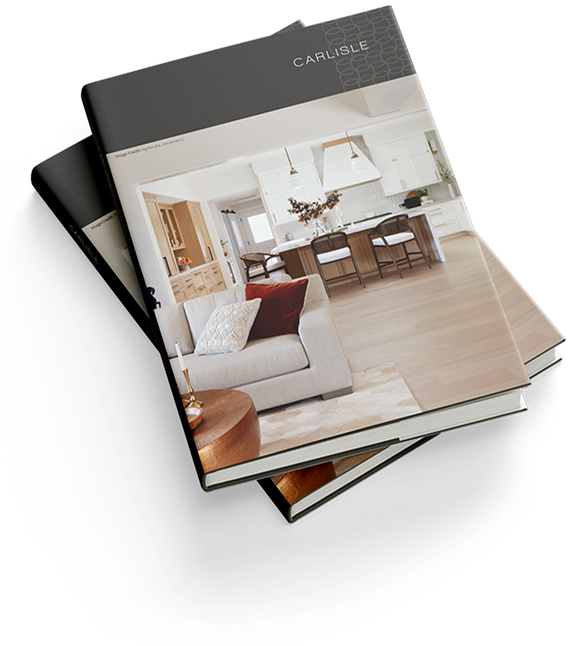
The Carlisle Residential Lookbook is filled with real projects, design inspiration, and ideas to guide your flooring journey. Download today and take the first step toward your own masterpiece.
By subscribing you agree to receive emails and marketing materials from Carlisle.