Walnut: A Closer Look with Chris Sy, President of Carlisle Wide Plank Floors
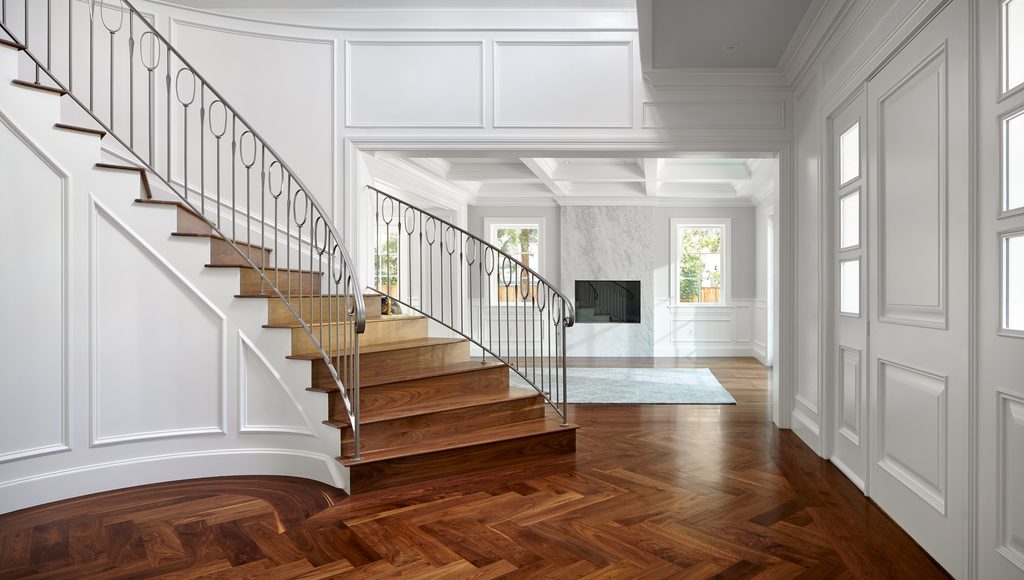
Walnut is a popular flooring choice for its color and patina. Its rich brown heartwood ranges from deep chocolate to faint purple undertones and rarely requires stain. Walnut is Carlisle’s third most popular species. Most walnut floors we make are finished in clear or amber so the natural tone can lead.
Designers often choose walnut when they want natural warmth, depth, and richness of color without relying on stain.
In this video, Carlisle President Chris Sy explains what shapes a walnut floor. He discusses where the timber grows, how color varies from board to board, how we treat sapwood in the kiln, how tree growth influences grade and length, and which finishes bring out its best.
What Chris Covers in This Video
Where the color comes from. Carlisle’s best walnut grows in the central Midwest. Chris names Southern Illinois and the Missouri-Iowa border region, where two sawyers cut specifically for Carlisle. That focus protects color consistency. Walnut’s color varies by the location in which it grows. Sourcing walnut from a range of locations would cause inconsistencies in the beautiful heartwood Carlisle’s walnut is known for. We chose to stay in the central Midwest for its rich color, wide boards, and long lengths.
Variation within the brown. Every walnut floor carries a range. Some boards read as a darker, true brown. Others are lighter brown. Some, once finished, show subtle purple tones. That range is part of what gives a walnut floor its depth.
Sapwood, softened in the kiln. Walnut also carries sapwood, the younger, lighter outer wood of the tree. The wider the board, the more of the tree’s natural character it reveals, often including additional sapwood near the edges. After drying, Carlisle introduces steam into the kiln. The process moves some of the tannins that color the heartwood into the sapwood. The result is a soft beige tone instead of a stark white sapwood, helping it blend into the floor’s overall color.
How the tree grows. Walnut releases a compound from its roots that suppresses young trees and shrubs nearby, clearing its own space in the forest. The trees grow tall yet hold on to their lower limbs longer than many species. That habit shapes the floor in two ways. Heirloom Grade walnut often carries more knots than other Heirloom species because walnut trees retain their lower branches longer as they grow. Along with natural heartwood and sapwood variation, these knots contribute to the character that defines the grade.
And lengths typically run 2 to 9 or 2 to 10 feet, since above that height larger branches change the character and usability of the timber.
Two grade-options. Alongside Heirloom, Carlisle offers walnut in Original Grade, with knots, some mineral streaking, and a bit more sapwood. Original can also be mixed with Heirloom to create what Carlisle refers to as a Signature Grade floor, offering a more natural, organic floor.
Hardness and care. Walnut is softer than birch, but harder than cherry. It will dent more readily than white oak or hickory in daily living. Protecting a walnut floor matters even more than it does with those species. With a softer floor like walnut, it is important to understand this, but to also recognize that it will become more beautiful with time, carrying your story in the form of wear and patina.
Finishes. Most walnut floors are finished clear, which holds the wood’s original color, or in amber satin or amber extra matte, which deepens the tone and adds golden hues. Chris describes that warm, rich brown as the most preferred look in walnut. As a third option, Carlisle’s clear UV oil buffed in, adds richness without as much of the yellowing that comes with amber.
Walnut in America
America has prized black walnut since colonial times. Cabinetmakers sought its chocolate-brown heartwood for their finest pieces and craftsmen came to know it as the queen of American cabinet woods. Much of that colonial furniture survives today in museums and antique collections.
Its strength and figuring also made walnut the preferred wood for gunstocks, a demand that drew heavily on the supply through the Civil War. By World War II, top-grade walnut had become so scarce that the U.S. government encouraged people to donate walnut trees to the war effort.
That history is part of why good walnut timber is valued the way it is today, and why where it grows matters. Its enduring appeal has made walnut one of the most sought-after hardwood species for luxury interiors, prized for the richness, depth, and character that have distinguished it for centuries.
Carlisle’s Approach to Walnut
Carlisle sources walnut from a focused region of the central Midwest, working with sawyers who cut specifically for us, so the finished floor closely reflects the sample a client approved, delivering greater consistency from board to board and project to project. Every board is graded by hand and milled in New Hampshire. Every Carlisle floor is made in the USA.
The same timber, grading, and finishes carry through whether a walnut floor is made with a solid or engineered structure.
Solid or Engineered Walnut
Carlisle makes walnut in two structures. Both begin with the same central Midwest walnut, the same hand grading, and the same Heirloom and Original Grade options. Lengths in either structure follow the tree, typically 2 to 9 or 2 to 10 feet.
Solid walnut is walnut all the way through its full thickness. It offers the widest planks: a random-width solid floor can reach about 12 to 13 inches, and single-width floors reach up to 10 inches. The most popular width is 8 inches.
Engineered walnut Engineered walnut pairs a 4mm wear layer, cut from the same walnut used in our solid planks, with a marine-grade Baltic Birch core of 9 to 11 plies for added stability. The wear layer can be refinished up to three times. Carlisle’s engineered floors are available in widths up to 10 inches. They exceed CARB2 requirements for formaldehyde emissions, contain no added urea formaldehyde, and are MAS Green Certified.
On a finished floor, the visible surface is walnut. The choice comes down to the project: plank width, the subfloor and environment, and what the architect or builder specifies.
Comparing Walnut with Other Species
Two species most often considered alongside walnut are white oak and hickory.
White Oak is Carlisle’s most popular species. Its tight, consistent grain accepts stain evenly, making it the preferred choice when a client wants a specific color. Walnut brings its own color and is rarely stained. White oak is also harder and more forgiving of dents during daily life. All about White Oak
Hickory is one of the hardest woods available, with bold heart and sap contrast. Its knots and character stand in sharp contrast to the board color. In walnut, knots and mineral streaking blend into the brown, which gives even the Original Grade a quieter overall look. See gallery for examples.
Learn more about all hardwood floor species
Subscribe to our newsletter for featured projects and events where you can find Carlisle
Download our new residential lookbook
Download our new commercial lookbook
Contact us today for a sample box
Video Transcript
Walnut is our third most popular floor. The main reason people purchase walnut is for its unique color tone. Rarely is it stained. It’s often just finished with a clear or an amber satin to really preserve or enhance the beauty of the natural color of the wood. Walnut actually grows out in the Midwest.
We get our best walnut in Southern Illinois, the border of Missouri and Iowa. We have about two sawyers that saw specifically for us, and the reason for that is that we wanna maintain the rich heart color. If we sampled a rich heart color from the central Midwest where we get our walnut, but then bought the walnut further south in Tennessee, the floor would not match sample.
And we find that that’s where the richest color, widest board, longest lengths really come from. One of the things that’s important to understand about walnut is the color, but even within that color, you’re gonna see variation. You’re gonna see boards that are darker true brown like this, while you’re also gonna have some boards that are a little bit lighter brown color.
This board, when you put some finish on it, will actually have some purple-y tones in it. Even though it’s a rich brown color, there are all kinds of shades inside that range. The other thing to notice, we put a board right in the center here, is the sap content of the walnut floor. This is a fairly close representation of how much sap you would see in 100 square feet.
But the wider you go, you probably get a little bit more sap in there. What you can see about this sap is that it’s actually a bit of beige. What we do is after we’re done drying the walnut, we actually introduce steam into the kiln, and we push some of the tannins that give the heartwood its brown color out into the sapwood to turn them a little bit lighter beige tone.
If we didn’t do that, that sap would actually be a very stark white sap. By doing that, we blend that sap in. It takes the, the sharpness of it away and blends it in a little bit better with the overall color tone. Walnut actually in its roots releases a compound that kills off a lot of other young trees or shrubbery that may try to grow close to it.
It’s being able to clear its own spot in the forest. When you find a walnut tree, generally the tree is very tall, but unlike other trees that self-prune those lower limbs off, walnut doesn’t tend to prune off those lower limbs as quickly. So you’re probably gonna have some more knots in the heirloom grade.
You can see some knot inclusions here and here, and that’s really part of the heirloom grade in walnut is to have some of that knots and certainly some of the sap heart variation. The other thing about that is that a walnut tree is going to tend to have limbs closer to the ground because of the way it grows.
And so the lengths that we have are typically two to nine or two to 10 feet. And the reason for that is that once you get above that nine or 10 foot mark, you really start encountering much larger branches that are gonna change the character or usability of that timber We do offer as well an original grade.
You can see it’s gonna have knots, some mineral streaking, little bit more sapwood maybe. Overall, the character blends in very well, unlike hickory, where the character is in sharp contrast to the board color. Walnut tends to blend very well. You can, of course, mix our original grade in with our heirloom grade to make what I would call a more natural or organic looking floor.
Walnut is a little bit softer. It’s going to be a little bit softer than birch, but a little bit harder than cherry. It is going to dent compared to white oak or hickory, not only as you’re living on it, but certainly when you’re installing it and there’s a lot of traffic. It’s really, really important to protect those walnut floors even more so than white oak or hickory.
As far as finishing walnut, the two most popular ones for us today are more of a clear, which is gonna maintain the original color of the walnut, and then the other popular option is to go with what is an amber satin or amber extra matte. But that amber really brings out the color tone of the walnut, gives it a much richer appearance.
It does add a little bit of a yellow tone to it, but the golden-y hues and rich brown is really probably our most preferred look in walnut. We also do have walnut with just our clear UV oil buffed in, which is gonna give it a little bit more richness and color than the clear without quite the yellowing of the amber satin.
As far as width of walnut goes, in a solid floor, we can make a random width floor up to about 12 or 13 inches wide. In a single width floor, the widest width is probably 10, maybe 11 or 12. 8 inch is certainly our most popular choice.