Luxury interiors are moving away from the overly polished, overly uniform, and overly produced. The most compelling spaces today do not feel like they were assembled from a catalog. They feel considered, layered, and deeply personal, shaped by materials that reveal the hand, the eye, and the judgment behind them.
This return to craftsmanship is especially visible in flooring. For architects, interior designers, and homeowners, the floor is no longer treated as a neutral surface. It is part of the story of the home: the first material felt underfoot, the surface that carries light through the room, and the element that quietly connects every architectural decision.
In this renewed appreciation for hand-finished materials, premium residential wood flooring has become a defining choice. More specifically, luxury wide plank floors offer the scale, texture, and authenticity that modern luxury interiors increasingly demand. At Carlisle, this focus on craft has always been central to our approach—one rooted in wide planks, custom details, and a deep respect for the natural character of wood.
Handmade vs. Mass-Produced Interiors
Mass production has made interiors faster and more accessible, but it has also made many luxury spaces feel strangely familiar. Standardized materials, repeated finishes, and uniform surfaces can create rooms that look expensive but lack depth.
Handcrafted interiors feel different.
They carry subtle variations that signal care:
- A surface that catches light differently from one plank to the next
- A texture that feels shaped rather than stamped
- A grain pattern that reveals the life of the tree
- A finish selected to complement the architecture, not just match a trend
This distinction matters in luxury homes. Clients are not only purchasing materials; they are investing in spaces that feel individual and enduring.
Wide plank flooring plays a powerful role in this shift. Wider boards naturally show more of the wood’s character, making the floor feel less manufactured and more connected to its origin. Instead of repeating small visual units across the room, wide planks create long expressive surfaces that feel intentional and architectural.
Carlisle’s Craftsmanship page reflects this philosophy, describing a process shaped by heritage, skill, and attention to detail. That kind of making is what distinguishes a crafted floor from a commodity product.
Why Craftsmanship Matters Again
The renewed focus on craftsmanship is not nostalgia. It is a response to how people want luxury interiors to feel now.
After years of fast design cycles and visual sameness, architects and interior designers are increasingly prioritizing materials that have permanence. Craftsmanship matters because it introduces qualities that cannot be convincingly replicated:
- Depth
- Irregularity
- Texture
- Provenance
- Human judgment
Designers such as Steven Gambrel and Roman and Williams are often associated with interiors that feel built over time, spaces where materials carry weight, atmosphere, and a sense of history. Their work demonstrates why craftsmanship still matters: it gives a room depth, warmth, and a human quality.
In flooring, that sense of craftsmanship comes through the selection of wood, the grading of each board, the precision of milling, and the finishing techniques that determine how the floor will age. For premium residential wood flooring, these decisions are not decorative extras. They are the foundation of long-term beauty.
Texture as Evidence of the Hand
Texture is one of the clearest ways craftsmanship reveals itself.
A perfectly smooth, highly uniform surface may feel clean, but it can also feel detached. In contrast, a hand-applied texture gives the wood dimension. It allows light to move across the surface more softly. It makes the floor feel tactile, not flat.
In modern luxury interiors, texture is often used with restraint. The goal is not to make a floor look artificially aged or overly rustic. The goal is to bring out the character already present in the wood.
Carlisle’s textured floors can include effects such as:
- Lightly worn surfaces
- Timeworn details
- Brushed grain
- Hand-applied character
These choices work especially well with luxury wide plank floors because wider boards give texture more room to breathe. Instead of becoming busy, the surface feels quiet and dimensional.
Carlisle’s article, Footworn & Timeworn: Textures that Whisper Heritage, explores how texture can convey a sense of history and material depth without overwhelming a refined interior.
Grading: The Art of Choosing Character
One of the most overlooked parts of craftsmanship is grading. Yet grading determines how the finished floor will feel as much as color or finish.
Wood is naturally varied. Some boards are clean and quiet, while others show knots, movement, mineral streaks, and richer character. A skilled flooring maker understands how to select and balance these boards, so the final floor supports the design intent.
In a formal residence, a cleaner grade may create elegance and restraint. In a mountain home, coastal retreat, or hospitality inspired interior, more character may bring warmth and authenticity. Neither is inherently better; the right choice depends on the architecture and the atmosphere the designer wants to create.
This is where craftsmanship becomes visible as judgment.
For wide plank flooring, grading is especially important because each board has greater presence. A single plank can carry significant grain movement and visual weight. Selecting the right grade ensures the floor feels intentional rather than random.
Carlisle’s previously written article, Luxury in Every Grade: Understanding Heirloom, Signature, and Original is a useful reference here, as it explains how grade selection shapes the personality of a finished floor.
Artisan Details in Modern Interiors
Craftsmanship in flooring is not limited to handwork. It also appears in the details that most people may not notice immediately, but feel over time.
These details include:
- Board width and length
- Edge profile
- Surface texture
- Sheen level
- Color clarity
- Finish depth
- Grain balance
In luxury interiors, these details matter because simplicity leaves nowhere to hide. A restrained room depends on material quality. When the palette is quiet, the craftsmanship becomes more visible.
Interior designers often use these subtle details to create distinction without relying on obvious ornament. A matte finish, a softened edge, or a carefully selected plank width can change the entire mood of a room.
The Design Studio helps bring these decisions together by allowing architects, designers, and homeowners to refine the structure, grade, width, color, texture, and pattern as part of a single complete floor design. That kind of collaborative process is essential when the goal is a floor that feels made for the space, not merely installed in it.
Wide Planks and the Language of Craft
Wide planks have always carried a sense of craft because they require more careful selection. A wider board reveals more of the tree. It shows longer grain movement, broader tonal shifts, and greater natural character.
This is part of what makes luxury wide plank floors so compelling in modern interiors. They create a bridge between architectural simplicity and natural richness.
In minimalist homes, wide planks prevent the interior from feeling cold. In traditional homes, they reinforce a sense of history. In transitional interiors, they create a foundation that works across both classic and contemporary elements.
The craftsmanship is not only in making the floor. It is in knowing how much to reveal.
Carlisle’s Legacy of Craftsmanship
As Carlisle approaches its 60th anniversary, its relevance in modern luxury interiors feels especially clear. The design world has changed dramatically over the past six decades, but the value of a beautifully made wood floor has only become stronger.
Today architects and interior designers may work with more contemporary forms, larger openings, and more complex material palettes, yet they continue to return to wood because it brings warmth, authenticity, and permanence.
Carlisle’s heritage is rooted in that continuity. The brand’s Heritage page speaks to a tradition guided by artisans’ respect for timeless wide plank floors. That legacy matters because luxury clients increasingly want to know not only what a product looks like, but how and why it was made.
This anniversary should not be understood as nostalgia. It is a reminder that true craftsmanship remains relevant because it adapts without losing its principles.
Legacy Focused Design
Modern luxury is increasingly legacy focused. Homeowners are designing residences meant to last. Developers are creating properties expected to hold value. Interior designers are selecting materials that will age gracefully instead of chasing short lived impact.
Wood flooring fits naturally into this mindset.
A well-made floor does not need to remain untouched to remain beautiful. It gains character through use. Its grain deepens. Its texture becomes part of daily life. Its presence becomes tied to the memory of the home.
For premium residential wood flooring, this long-term view is essential. The best floors do not simply survive years of use; they become more meaningful because of it.
Carlisle’s article From Forest to Finish: Carlisle’s Artisanal Craftsmanship offers a deeper look at this journey, from responsible sourcing to hand finishing, and is a natural companion to any discussion of craft in luxury interiors.
Craftsmanship as a Collaboration
The most successful luxury interiors are rarely the result of one decision maker. They come from collaboration between architects, interior designers, builders, artisans, and clients.
Flooring sits at the center of that collaboration. It must respond to the architecture, support the interior palette, perform in the environment, and meet the client’s expectations for daily living.
For that reason, craftsmanship is not only about what happens in the mill. It is also about listening, refining, sampling, and adjusting until the floor belongs to the project.
A designer may ask for a texture that feels softer. An architect may need a width that aligns with room proportions. A homeowner may want a tone that works with both antique furniture and contemporary lighting. Each decision requires judgment.
That is where Carlisle’s custom approach gives design teams room to create flooring with specificity and confidence.
Why Craft Feels Modern Now
Craftsmanship might sound traditional, but in today’s interiors, it often feels distinctly modern.
The reason is simple: modern luxury values authenticity. A handmade or hand-finished detail brings depth to clean architecture. It keeps minimal rooms from feeling sterile. It allows natural imperfections to coexist with precision.
This is why wide plank flooring has such a strong presence in contemporary design. It offers a surface that is both simple and expressive. The format is clean; the material is alive.
That balance is at the heart of modern luxury.
Conclusion
The return of craftsmanship in luxury interiors reflects a deeper shift in what clients value. They are looking beyond surface beauty toward materials with substance, provenance, and lasting presence.
Premium residential wood flooring answers that desire by bringing natural character, artisan detail, and long-term value into the home. Luxury wide plank floors elevate that experience further, allowing the full scale and beauty of the wood to shape the interior.
As Carlisle approaches 60 years of craftsmanship, its commitment to wide plank flooring continues to feel both timeless and current. In a design world that increasingly values authenticity over uniformity, the handcrafted floor has returned not as a trend but as a lasting expression of modern luxury.
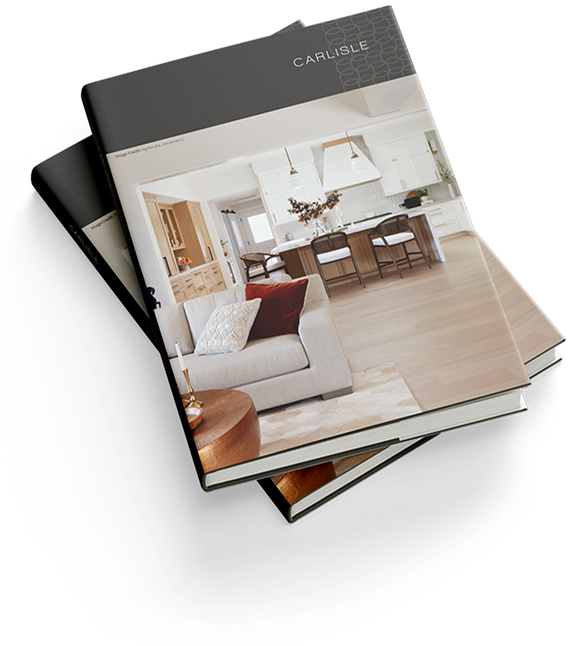
The Carlisle Residential Lookbook is filled with real projects, design inspiration, and ideas to guide your flooring journey. Download today and take the first step toward your own masterpiece.
By subscribing you agree to receive emails and marketing materials from Carlisle.