Carlisle’s First Floor Is Still in the Family
In 1970, Megan and Mike Kidder acquired something unusual even by New Hampshire standards: an 1813 Cape Cod that needed not just restoration but relocation. The original structure sat at the bottom of a hill, and the plan had been to move it whole. But the incline from the old driveway was too steep, and fearful it might crack in half, they dismantled it instead, moved it, and then reassembled it on a cleared site higher up the slope.
The pair spent two years getting it just right. They were rebuilding as much as restoring, replacing damaged wood with full-width chestnut they happened to have from a tobacco barn in Deerfield, Massachusetts, where they had lived before. It was a new old house, as Megan puts it, built from materials that had already proven themselves across generations and meant, from the beginning, to last.
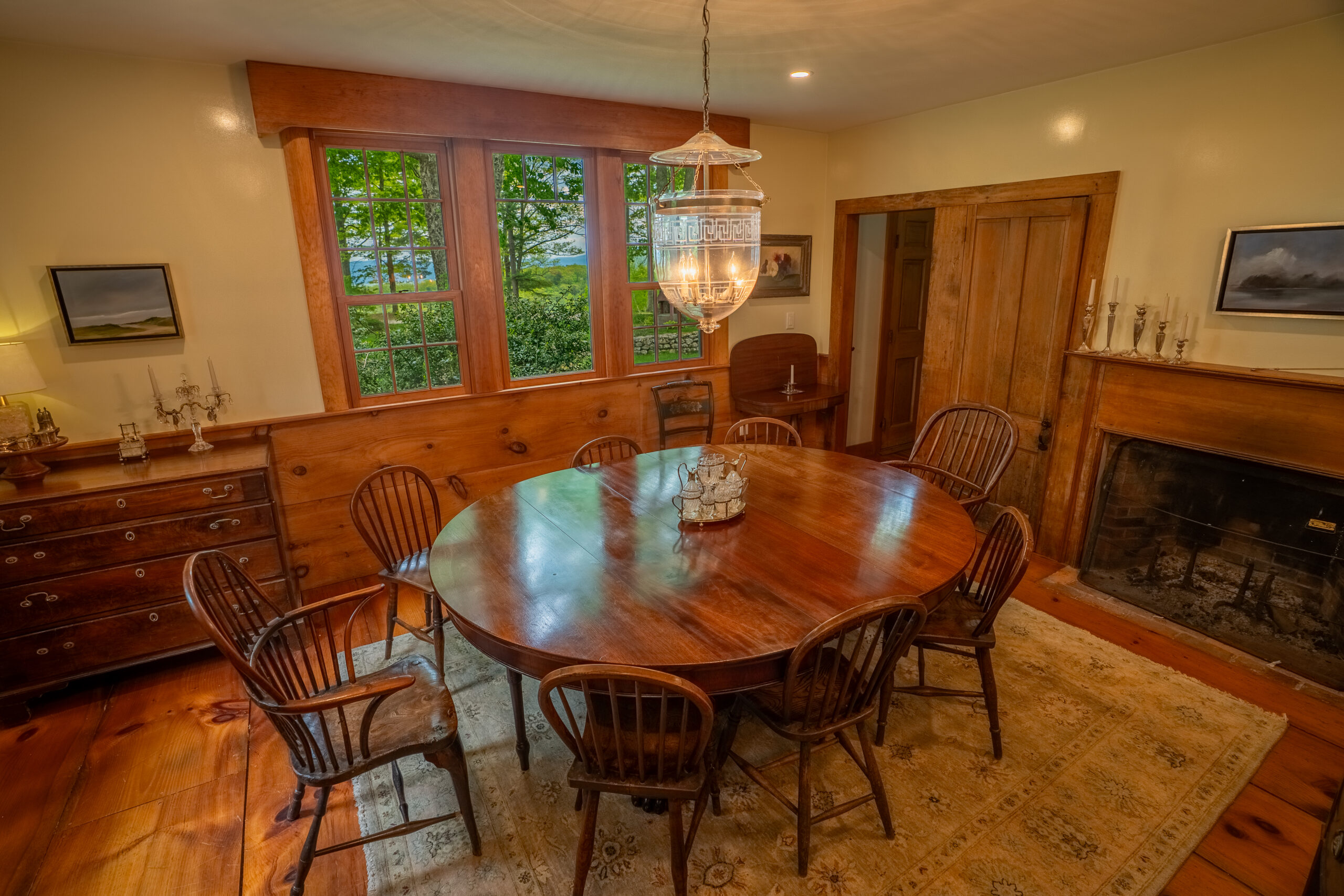
“The first Thanksgiving that we had here, my grandmother-in-law said, ‘We’re now going to have Thanksgivings at your house.’ The floor in the dining room was just a subfloor. We hadn’t even put down a real floor yet. So we got this really ugly rug, threw it down, put corn stalks in the corner — and that was the beginning of Thanksgivings here for the next 46, 47 years.”
— Megan Kidder
Discovering Carlisle Wide Plank Floors
Sometime around 1971, Megan and Mike saw an ad in the local Shopper for wide pine boards and drove to have a look. They met Dale Carlisle who, operating out of the trailer portion of a tractor-trailer, had a supply of pine he had sourced from sawmills in northern Maine and into Canada.
Each board was cut to his own specifications because nobody was milling them that wide. Carlisle Wide Plank Floors was, at that point, just Dale and his wife, a new idea, and a lot of exceptional wood.
They bought everything he had, brought it home, and installed it themselves, countersinking every nail below the surface because flush didn’t suit the look they were after. It was a painstaking process that took months and produced a floor that has remained underfoot in that house ever since.
A Floor That Tells a Family’s Story
Pine is softer than many hardwoods, which is precisely what makes it such an honest material. It holds what happens to it. It accumulates the record of a life lived indoors without apology or concealment.
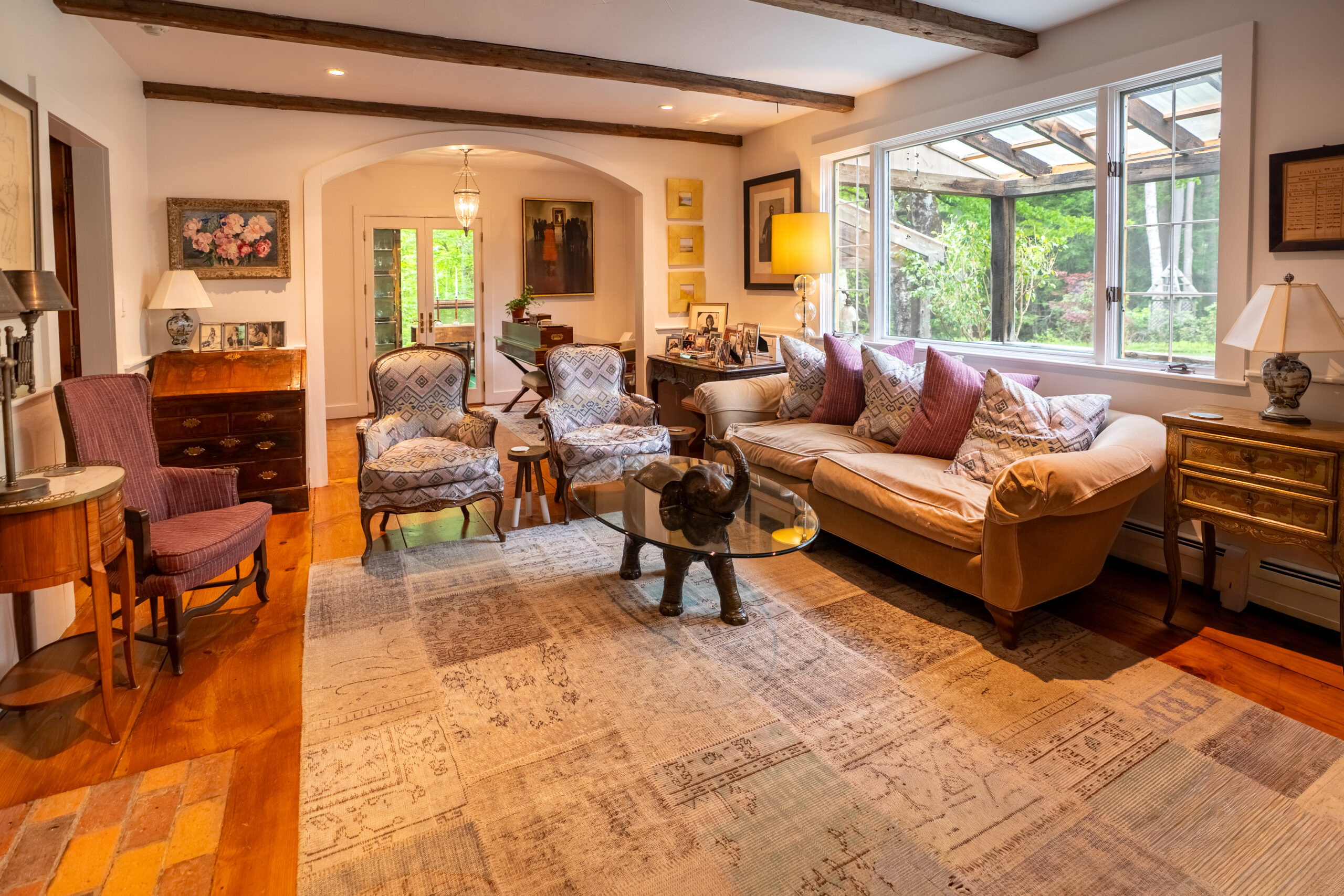
The floors of the Kidder home carry marks from a rabbit that once lived in the den, whose claws turned out to be more formidable than anyone anticipated. They also bear dents from children, scuffs from decades of dogs, and all the evidence of a household that has always been fully inhabited.
Pine has a warmth that Megan says is not universal among woods. Some species feel colder to her, and some belong in more modern settings. She has never been tempted to refinish the floors.
“It looks more lived in, and I like that look. I’m not a person who’s big into new shiny things. I like things with a little character, and that takes age.”
— Megan Kidder
Over the decades, sunlight streaming through the windows has worked on the pine in ways no stain could replicate, deepening its color and character. What the floors have become is inseparable from everything that has happened on top of them.
More Than a Business Relationship
What the Kidders had not anticipated when they drove to meet Dale Carlisle was the friendship that would come with the transaction.
Dale’s son Donnie was the same age as the Kidders’ son Kieran, and the boys became close friends. They spent years fishing, exploring, and growing up together.
Dale and his wife Carol became woven into the fabric of the family’s life. Later, as Carlisle Wide Plank Floors grew from a small operation into a nationally recognized company, the connection between the two families continued.
A teenage Chris Carlisle even spent his high school years working for Mike Kidder, learning lessons that would stay with him throughout his life and career.
“What a three-line ad created.”
— Katie Kidder
Growing Up on Carlisle Floors
Katie Kidder grew up on these floors.
She came home as a baby to the same boards that remain beneath her feet today. She learned to walk on them, ran across them on Christmas mornings, and sat beside the fireplaces through decades of family gatherings.
Because Megan owned a small shop in town and rarely left Keene during the holidays, the house naturally became the family gathering place. It was always filled with activity, laughter, and the kind of memories that seem to settle into the wood itself.
Like many children, Katie eventually moved away and built a life elsewhere. Yet she carried a love for Carlisle floors with her, installing them in several of her own homes over the years.
A few years ago, however, she returned home.
Coming Home Again
Today, Katie wakes up in the same house where she grew up.
She looks out across the fields, gardens, and the barn her father built and still finds joy in simply pulling into the driveway.
The walls are now painted white, a departure from the deeper historical colors her mother preferred. The change was intentional.
“The walls are white because it’s going to allow everything else to shine.”
The fireplaces, antique furniture, hand-crafted details, and especially the floors now take center stage.
Visitors frequently stop to admire the extraordinary width of the pine boards. Many ask for a tape measure because they have never seen flooring quite like it.
Katie even has a favorite board. She cannot fully explain why, only that it has been her favorite for years.
Floors That Continue to Speak
When she is alone in the house and hears a floorboard creak in another room, Katie often wonders about the story behind the sound.
To her, the floors are not merely part of the house. They are participants in its history.
“I feel like they do talk.”
She thinks about the trees these boards came from, growing in northern Maine for perhaps two hundred years before being transformed into flooring.
Those trees have now spent more than half a century serving a different purpose—supporting generations of family life.
“That was their life, to grow for 200 years, and now they’ve been in the second phase of their life for the past 60 years, helping me grow, my siblings, my kids. They’ve got a big job ahead.”
A third generation will grow up on these floors, and Katie has every confidence they will continue to endure.
A Legacy Passed Forward
When asked what it means to pass this home and its floors on to her daughter, Megan’s answer is practical rather than sentimental.
“It means that your work was well thought, and that it was properly done, and that your values get passed on to the next generation.”
Then she adds:
“Nice when people appreciate. They’re not trying to start everything over brand new again.”
The floors have now witnessed more than fifty years of family life. They have been present for every Thanksgiving, every milestone, every season of change, and every return home.
Installed by hand, cared for through generations, and passed forward as both a gift and a responsibility, they remain exactly what the women who live on them believe them to be:
Not owners. Keepers.