Luxury flooring has changed dramatically over the past six decades. Homes have become more open. Architecture has become cleaner. Interior designers have moved toward more natural materials, quieter finishes, and greater personalization. Developers now expect flooring to support not only beauty, but also long-term value, consistency, and performance at scale.
Yet one thing has remained constant: truly exceptional wood flooring depends on craftsmanship.
As Carlisle approaches 60 years of wide plank flooring expertise, its legacy reflects more than longevity. It reflects a sustained commitment to material integrity, custom design, and the belief that a floor should be made for the space it inhabits. In an industry where trends change quickly, Carlisle’s work has continued to show why luxury wide plank floors remain one of the most enduring choices in high end residential and architectural design.
For architects, interior designers, developers, and homeowners investing in premium residential wood flooring, Carlisle’s story is not simply about the past. It is about how careful craftsmanship continues to shape the future of wide plank flooring.
Carlisle’s Heritage and Legacy
Carlisle’s identity has always been closely tied to wide plank wood floors. Long before wide planks became a defining feature in luxury interiors, Carlisle recognized the architectural beauty of broader boards, longer lengths, and natural wood character.
A wide plank floor is fundamentally different from a standard narrow board floor. It reveals more of the tree. It allows grain to move across the surface with greater expression. It reduces visual seams. It gives a room a sense of scale that feels both historic and contemporary.
That understanding has helped Carlisle remain relevant across changing design eras. Whether specified for traditional estates, modern residences, luxury apartments, or hospitality inspired interiors, Carlisle floors are built around the idea that wood should be honored rather than overly processed.
Carlisle’s article From Forest to Finish: Carlisle’s Journey of Artisanal Craftsmanship explores this philosophy in greater detail, tracing how material selection, milling, finishing, and craftsmanship all contribute to the final floor. That journey remains central to Carlisle’s identity as the company nears this 60-year milestone.
The Evolution of Luxury Flooring Over Six Decades
Over the past 60 years, luxury flooring has moved through several distinct phases.
There was a time when formal interiors favored highly polished finishes, darker stains, and more traditional floor patterns. Later, modern design introduced cleaner lines, lighter palettes, and more open floor plans. More recently, luxury interiors have shifted toward authenticity: natural texture, matte finishes, wider boards, and custom details that feel personal rather than mass produced.
Through these changes, wide plank flooring has become increasingly important because it supports both traditional and contemporary design. It can feel historic in a restored estate, architectural in a modern home, and quietly refined in a luxury apartment.
This adaptability is one reason luxury wide plank floors continue to hold their place in high end design. They are not tied to one style period. Their strength lies in proportion, material quality, and craftsmanship qualities that remain valuable even as design preferences evolve.
How Architecture Changed the Role of Flooring
Architecture has played a major role in the rise of wide plank floors.
As homes became more open, flooring had to do more visual work. In older layouts, each room could have its own identity. In today’s open-plan residences, the floor often connects the kitchen, dining area, living room, hallways, and private spaces into one continuous surface.
This made plank width more important.
Narrow boards can create too many seams across a large space, making the floor feel busy. Wider boards create calmer sightlines and allow the architecture to feel more expansive. In large rooms, long corridors, and glass filled interiors, wide plank flooring brings order and warmth.
This idea was explored in Why Wide Plank Floors Are the Ultimate Luxury Statement, where wide boards were positioned as a design feature that enlarges rooms, showcases grain, and turns flooring into a true architectural focal point.
For Carlisle, this architectural shift reinforced what the brand had long understood: wider planks are not simply a style preference. They change how a space is experienced.
Design Preferences Became More Personal
Luxury once leaned heavily on recognizable signals: glossy surfaces, formal detailing, and clearly expensive materials. Today, luxury is more personal and more refined. Clients want homes that feel designed around their lives, their architecture, and their long-term sense of style.
This shift has increased demand for premium residential wood flooring that can be customized in meaningful ways.
Design teams now consider:
- Species and grain structure
- Plank width and length
- Grade and character
- Texture and surface treatment
- Finish sheen
- Color direction
- Pattern or layout
- Solid or engineered construction
This level of control matters because flooring influences every other material in the room. It must work with stone, millwork, metal, plaster, textiles, and lighting.
Carlisle’s custom approach reflects the modern expectation that luxury should feel specific. A floor should not feel like it was selected from a limited menu. It should feel designed for the home.
Relationships with Architects and Interior Designers
One of Carlisle’s most important contributions to luxury flooring has been its role as a collaborator for architects and interior designers.
In high end projects, flooring decisions are rarely isolated. Architects think about proportion, transitions, structure, and flow. Interior designers consider color, texture, furniture, millwork, and atmosphere. Developers look for consistency, durability, and market appeal. A successful floor must satisfy all these priorities.
This is where collaboration becomes essential.
Designers such as Thomas Pheasant, Steven Gambrel, and Brigette Romanek are often associated with interiors that rely on balance, material depth, and thoughtful restraint. Architecture firms such as Olson Kundig have helped shape a contemporary design language built around natural materials, strong forms, and a close relationship between structure and setting. While each designer or firm has a distinct perspective, their work reflects a shared truth: materials matter most when they are integrated with intention.
Carlisle’s work with architects, designers, builders, and homeowners supports that kind of integration. The floor is not treated as a late-stage finish. It becomes part of the design conversation from the beginning.
Why Craftsmanship Still Matters in Modern Luxury
Modern luxury interiors may appear simpler than those of previous decades, but simplicity often demands even greater craftsmanship.
When a room is restrained, every detail becomes more visible. A poorly selected floor, an uneven finish, or a surface that feels too uniform can disrupt the entire composition. In a quiet interior, quality cannot be hidden by visual noise.
Craftsmanship matters because it determines:
- How boards are selected
- How grain is balanced
- How color is developed
- How texture is applied
- How the finish interacts with light
- How the floor will age over time
For luxury wide plank floors, these decisions are especially important because each board has greater visual presence. Wide planks reveal more of the wood, which means selection and finishing must be handled with care.
A handcrafted floor feels different because it carries judgment. It reflects choices made by people who understand wood as a natural material, not simply a product category.
Wide Plank Flooring and the Meaning of Permanence
One reason Carlisle’s work remains relevant after nearly 60 years is that wood flooring has a unique relationship with time.
Many luxury materials are valued because they appear flawless when new. Wood is different. A well-crafted wood floor can become more meaningful as it ages. It develops patina. It absorbs light differently. Its character becomes tied to the life of the home.
This is why premium residential wood flooring is often chosen for legacy homes, family estates, and long-term residences. It offers permanence without feeling static.
For developers, that permanence also has value. In luxury residential and mixed-use projects, flooring contributes to buyer confidence. It signals that the property has been designed with materials meant to endure.
Carlisle’s emphasis on craftsmanship supports this long view. The goal is not simply to create a floor that looks impressive on installation day. The goal is to create a floor that continues to feel relevant and enduring years later.
The Ongoing Appeal of Natural Materials
As design has evolved, natural materials have become more important, not less. Stone, plaster, linen, leather, metal, and wood all bring qualities that synthetic materials often struggle to replicate.
Wood remains especially powerful because it combines warmth with structure. It can make a large room feel comfortable, soften clean architecture, and create continuity across a home.
Wide plank flooring enhances these qualities by allowing the wood to appear on a more generous scale. Instead of breaking the floor into narrow repetitions, wide boards create a broader, calmer visual field.
This is why luxury wide plank floors remain relevant across so many design styles. They can support quiet luxury, traditional elegance, modern minimalism, rustic refinement, and hospitality inspired residential design.
Their flexibility comes from the authenticity of the material itself.
Carlisle and the Future of Luxury Wide Plank Flooring
As Carlisle approaches its 60-year anniversary, the future of luxury flooring continues to move toward customization, collaboration, and material honesty.
Architects and designers are expecting more from flooring. They want larger formats, refined textures, thoughtful finishes, responsible sourcing, and products that perform in modern homes and developments. Homeowners want floors that feel personal and enduring. Developers want materials that elevate perception while supporting long-term value.
Carlisle’s position in this future is rooted in the same principles that shaped its past:
- Respect for wide plank craftsmanship
- Custom design rather than standardization
- Collaboration with design professionals
- Attention to material character
- Long term performance and beauty
In a design world where speed and sameness are common, these principles matter more than ever.
A Legacy Built Board by Board
A 60-year legacy is not built through one product or one trend. It is built through consistency through thousands of decisions made across countless projects, homes, and design collaborations.
Every floor carries those decisions. The width of a plank. The grade of the wood. The way texture is applied. The way color settles into the grain. The way the finished surface supports the surrounding architecture.
That is why Carlisle’s contribution to premium residential wood flooring is not only about making floors. It is about helping shape how luxury interiors use wood as a defining material.
Conclusion
Over nearly 60 years, Carlisle has helped advance the role of wide plank flooring in luxury design from a traditional craft to a defining feature in modern architecture and interiors.
As design preferences have evolved, Carlisle’s commitment to craftsmanship has remained steady. Wider boards, natural materials, custom textures, and refined finishes continue to offer what luxury clients value most: authenticity, permanence, and beauty that does not depend on passing trends.
For architects, interior designers, developers, and homeowners seeking luxury wide plank floors, Carlisle’s legacy reflects a simple yet enduring idea: a truly exceptional floor is not manufactured for the moment. It is crafted for the life of the space.
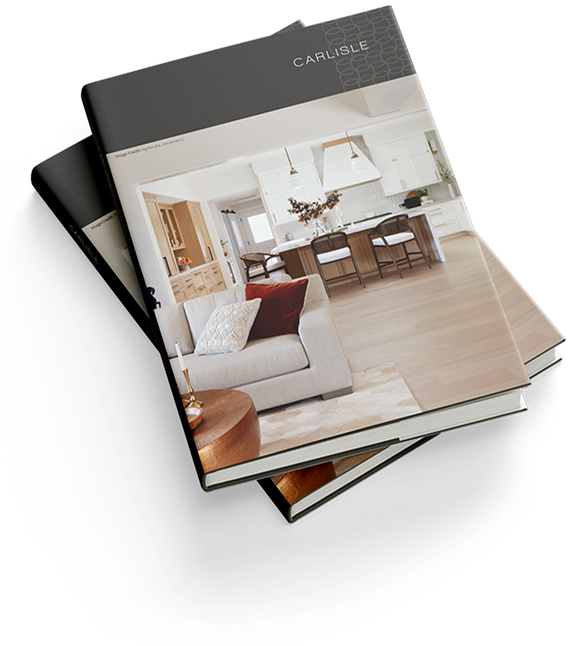
The Carlisle Residential Lookbook is filled with real projects, design inspiration, and ideas to guide your flooring journey. Download today and take the first step toward your own masterpiece.
By subscribing you agree to receive emails and marketing materials from Carlisle.