Luxury interiors are increasingly being designed around a feeling rather than a display. The most desirable homes today are not always the most ornate or visually dramatic. They are the spaces that feel balanced, grounded, and deeply livable. For architects, interior designers, and homeowners, this shift has placed greater emphasis on materials that create calm through proportion, texture, and restraint.
Flooring plays a central role in that experience. It is the surface that carries the eye through a room, connects one space to another, and quietly influences whether a room reads as calm or visually busy. In this context, wide plank flooring has become one of the most effective tools for creating luxury spaces that feel composed rather than overdesigned.
By reducing seams, emphasizing natural material, and supporting clean architectural lines, luxury wide plank floors help create interiors that feel expansive, warm, and emotionally comfortable. For clients investing in premium residential wood flooring, the appeal lies not only in how the floor looks, but in how it changes the way a home is experienced every day.
Minimalism vs. Warmth in Luxury Design
Minimalism has influenced luxury architecture for decades, but today’s most successful interiors are moving beyond stark simplicity. Homeowners still appreciate clean lines, open space, and visual restraint, but they also want warmth, comfort, and material depth.
This is where wood flooring becomes essential.
A minimalist space can feel cold if the materials are too hard, too glossy, or too uniform. Concrete, glass, steel, and stone may create architectural clarity, but without a natural grounding element, the interior can feel more like a gallery than a home.
Wide plank flooring softens that effect. It brings warmth to clean architecture without adding unnecessary decoration. The natural grain of wood introduces subtle movement, while the wider format keeps the overall appearance calm and uncluttered.
This balance of minimalism softened by natural material is what makes many contemporary luxury homes feel both refined and livable.
Why Visual Simplicity Matters in Luxury Homes
Visual simplicity is not the same as plainness. In luxury interiors, simplicity requires careful editing. Every material must earn its place.
A calm interior usually depends on:
- Fewer visual interruptions
- Consistent material transitions
- Balanced proportions
- Natural textures
- Controlled contrast
Flooring affects all these elements. Narrow boards, frequent seams, or overly busy surface treatments can create visual noise. Even when the material itself is beautiful, too much repetition across a large floor plane can make the space feel unsettled.
Luxury wide plank floors solve this by simplifying the field of view. Wider boards reduce the number of lines crossing the floor, allowing the room to feel more open and intentional. Instead of noticing the pattern of the flooring first, the eye takes in the architecture, light, furniture, and overall composition.
That visual calm is one of the quiet markers of luxury.
Reducing Visual Clutter Through Wider Planks
One of the most practical advantages of wide plank flooring is its ability to reduce visual clutter.
In a standard narrow board floor, seams appear frequently across the room. In smaller spaces, this may be acceptable. But in large luxury homes, open plan layouts, and expansive primary suites, those seams can interrupt the sense of flow.
Wider planks create a cleaner surface.
They help:
- Make rooms feel more expansive
- Strengthen long sightlines
- Reduce surface repetition
- Highlight the natural character of the wood
- Support a more architectural interior language
For designers, this matters because calm is often created through subtraction. Removing unnecessary lines allows the most important elements of the room to stand out.
Carlisle explored this idea in Designing for Scale: Flooring Strategies for Large Luxury Spaces, where wider boards were presented as a means of managing proportion in expansive homes. That same principle applies here: when the floor becomes quieter, the entire space feels more balanced.
Olson Kundig and the Contemporary Architectural Influence
Contemporary American architecture has had a strong influence on how luxury homeowners think about materials. Firms such as Olson Kundig are often associated with homes that connect architecture, landscape, and natural materials in a deeply intentional way. Their work frequently emphasizes restraint, strong forms, and material honesty ideas that align closely with the role of wood flooring in calm interiors.
This kind of architecture does not rely on excessive decoration. Instead, it depends on the relationship between structure, light, landscape, and surface.
In homes inspired by this approach, premium residential wood flooring serves as a natural bridge between architecture and daily life. It softens strong lines, brings warmth to large volumes, and helps the home feel connected to its surroundings.
The floor becomes part of the architectural experience rather than a separate design layer.
Flooring’s Role in Emotional Comfort
A luxury home should feel impressive, but it should also feel comfortable. Emotional comfort is shaped by many subtle factors: acoustics, texture, light, proportion, and material warmth.
Wood flooring contributes to that comfort in several ways.
First, it introduces natural variation. Unlike synthetic or overly uniform surfaces, real wood carries grain, tone, and subtle movement. This creates a sense of depth that feels organic and human.
Second, wood softens a room visually. In spaces with stone countertops, steel windows, glass walls, or plaster surfaces, wide plank flooring adds warmth without disrupting the architectural language.
Third, wider planks reduce visual busyness. A calmer floor surface can make a room feel less stressful and more open.
For homeowners investing in luxury wide plank floors, this emotional quality is often what makes the floor feel truly luxurious. It is not simply about appearance; it is about how the home feels to live in.
Material Restraint and the Feeling of Space
Calm interiors often depend on restraint. Instead of filling a room with competing finishes, designers choose a limited palette and allow each material to have presence.
Wood flooring is especially effective in this approach because it can carry warmth across an entire home without requiring additional visual complexity.
In open plan spaces, a continuous wood floor helps different zones feel connected. The kitchen, dining area, living room, and circulation spaces can each have their own function while still belonging to the same architectural story.
Premium residential wood flooring supports this by offering a level of quality and consistency appropriate for high end homes. When the floor is well selected, it does not need constant attention. It quietly supports everything above it.
The Importance of Texture in Calm Interiors
Texture is one of the most important design tools in calm luxury spaces. Without texture, minimal interiors can feel flat. With too much texture, they can feel visually heavy.
The key is subtlety.
A lightly brushed or softly worked wood surface can create depth without distraction. Matte and low sheen finishes can reduce glare, allowing the floor to absorb light rather than reflect it sharply. Natural grain can add quiet movement without becoming decorative.
In luxury wide plank floors, texture is especially powerful because wider boards give the material more room to express itself. The texture does not need to be dramatic. Even a restrained surface treatment can change the way light moves across the room.
This kind of quiet detail is often what makes an interior feel layered and expensive without looking overdesigned.
Wide Plank Floors in Open Plan Living
Open plan homes are one of the clearest examples of why flooring matters. When multiple functions share one large space, the floor must create unity without making the room feel monotonous.
Wide plank flooring helps achieve this balance.
It allows the architecture to remain open while giving the space a consistent foundation. In a large living area, wider boards can make the room feel calmer and more expansive. In a kitchen, they can soften cabinetry and stone. In a dining area, they can provide warmth and intimacy without requiring a hard visual boundary.
For architects and designers, this makes wide plank floors a flexible design tool. They can define the mood of the entire home while still allowing each area to feel distinct through furniture, lighting, and material layering.
Luxury That Feels Livable
There is a meaningful difference between a luxury space that looks beautiful in photographs and one that feels good to live in.
Livable luxury requires materials that can handle real life while maintaining their character. Floors must support daily movement, changing light, gatherings, quiet mornings, and long term use.
Premium residential wood flooring is especially well suited to this because natural wood develops character over time. Rather than feeling static, it matures with the home. Subtle patina, grain variation, and texture allow the floor to remain beautiful without feeling precious.
This is one reason luxury wide plank floors continue to resonate with homeowners who want elegance without stiffness. The floor feels refined, but not untouchable.
How Carlisle Supports Calm, Architectural Interiors
Carlisle’s approach to wide plank flooring aligns naturally with the architecture of calm. By allowing clients, architects, and designers to refine plank width, species, texture, tone, and finish, Carlisle supports floors that feel fully integrated into the design of the home.
The goal is not to create a floor that overwhelms the interior. It is to create one that belongs.
Through custom wide plank craftsmanship, Carlisle helps design teams create flooring that supports proportion, warmth, and continuity —qualities that are essential in luxury homes where every detail is visible.
Conclusion
The architecture of calm is built through thoughtful restraint. It depends on materials that create warmth, order, and emotional comfort without unnecessary visual noise.
Wide plank flooring plays a powerful role in that process. By reducing seams, enhancing natural grain, and supporting clean architectural lines, it helps luxury homes feel more open, grounded, and livable.
For architects, designers, and homeowners investing in premium residential wood flooring, Carlisle’s luxury wide plank floors offer a foundation for interiors that do more than impress. They create spaces that feel balanced, personal, and enduring.
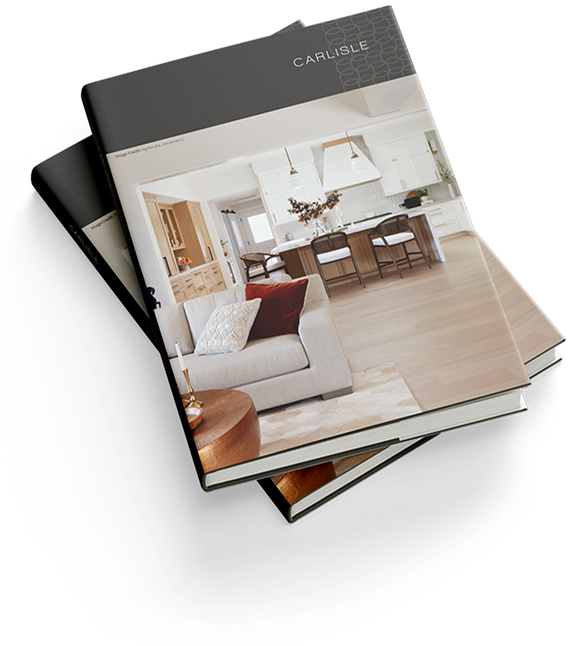
The Carlisle Residential Lookbook is filled with real projects, design inspiration, and ideas to guide your flooring journey. Download today and take the first step toward your own masterpiece.
By subscribing you agree to receive emails and marketing materials from Carlisle.